Games
a selection of Games on PC/MAC and mobile I have made or worked on
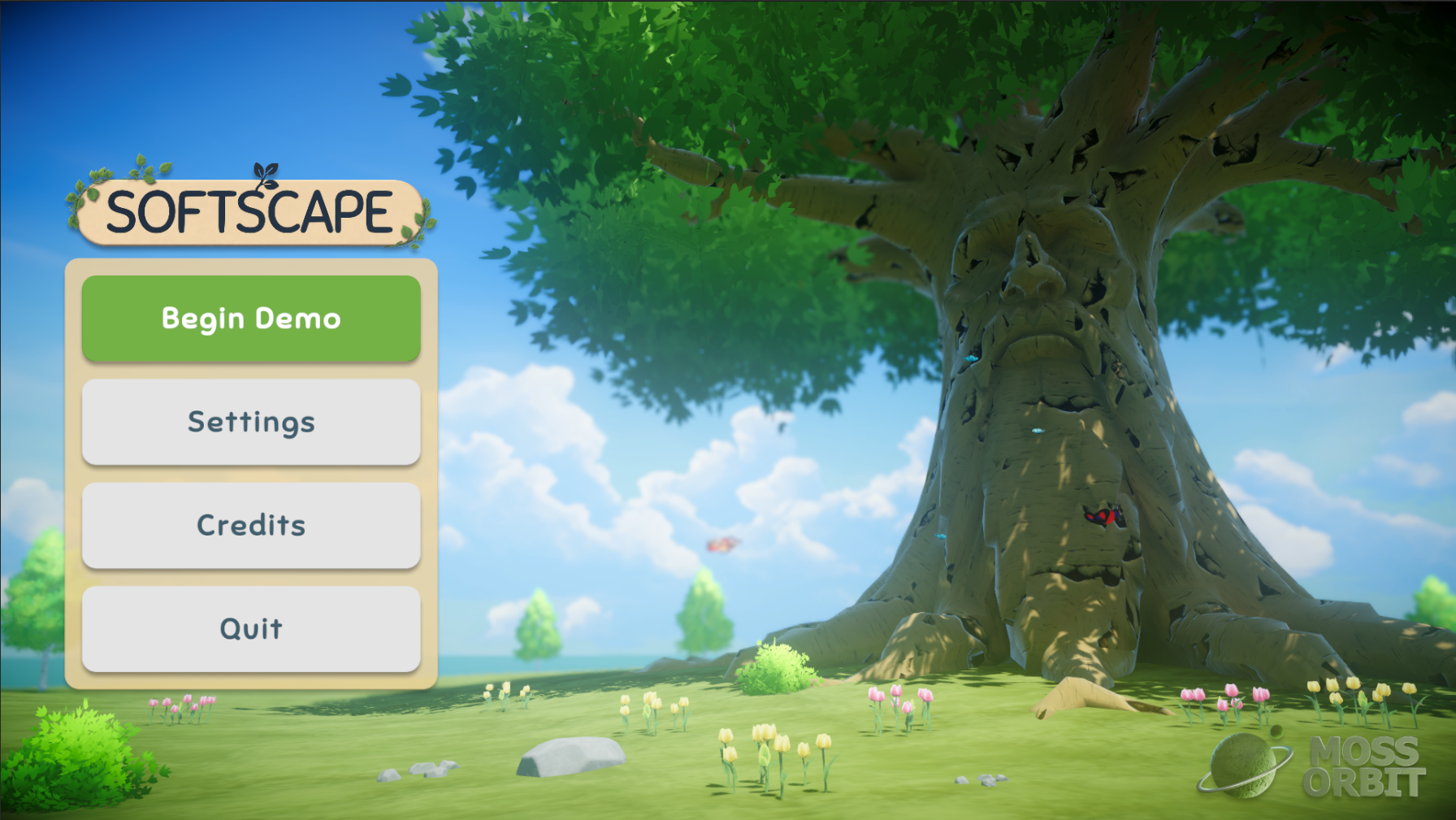
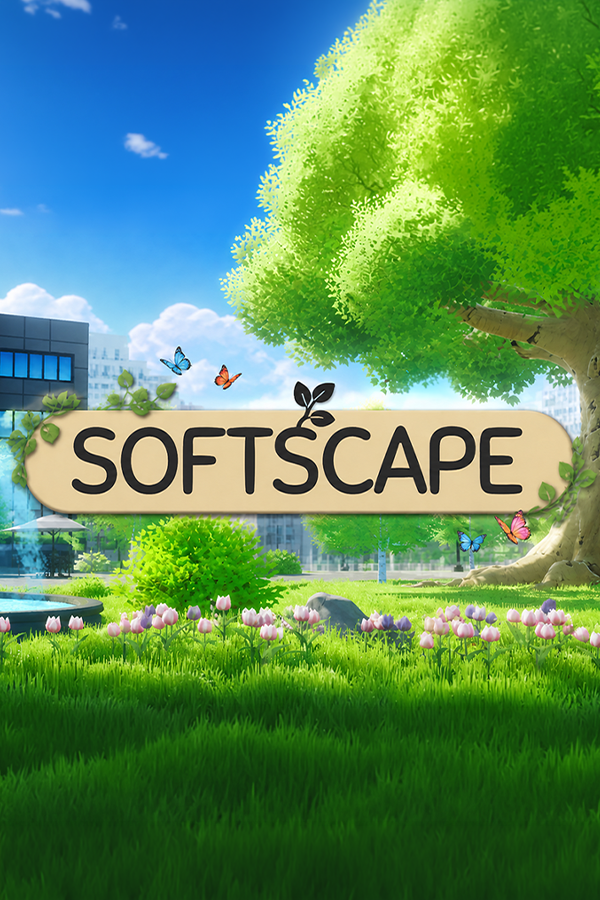
Softscape
Summary
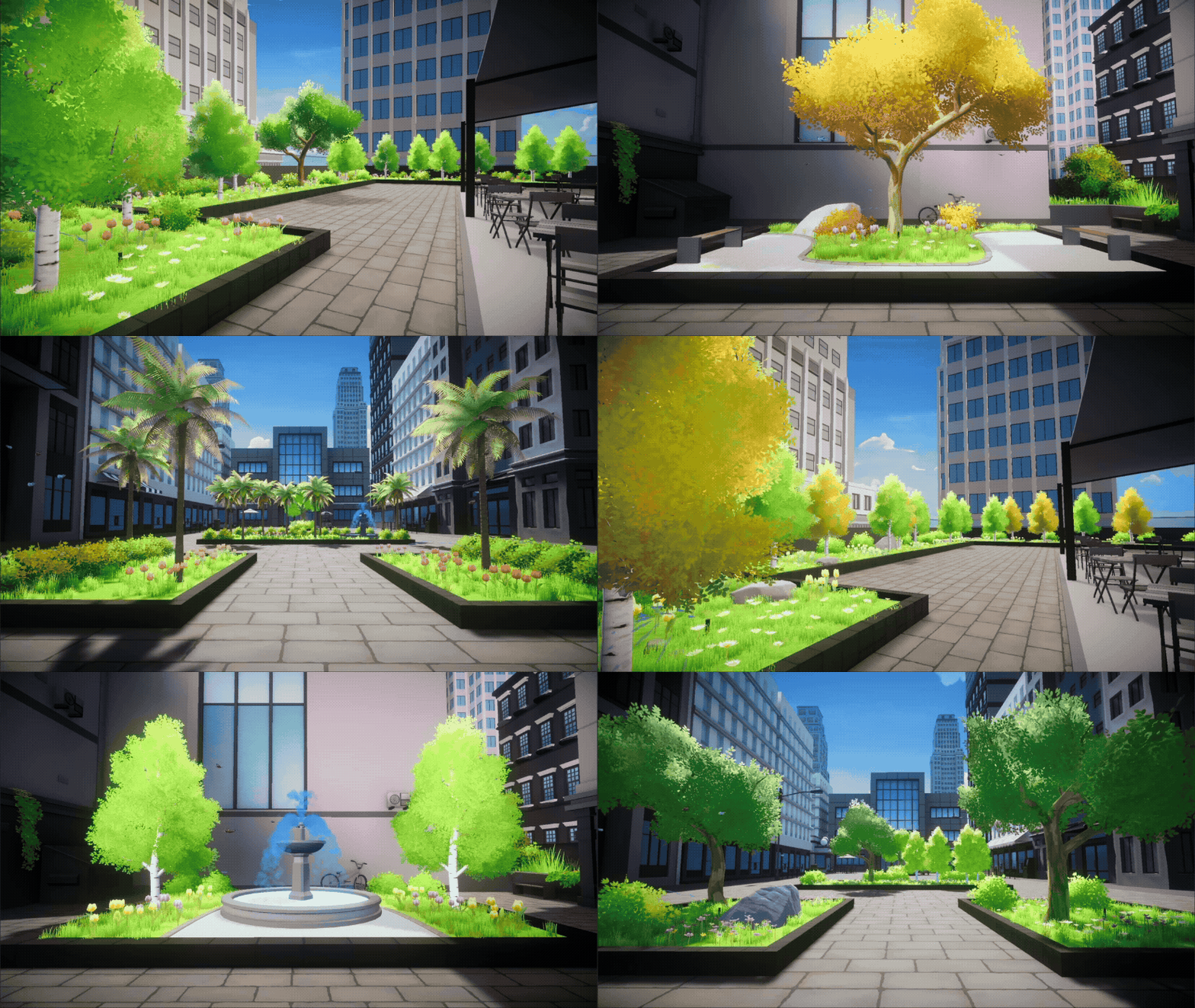
A relaxing first-person gardening and restoration game where players transform empty urban spaces into peaceful green environments through irrigation, landscaping, planting, and decorative design. Link
Context
Softscape is an independent game developed under my game studio, Moss Orbit, created as a cozy restoration experience focused on nature, creativity, and slow, satisfying transformation.
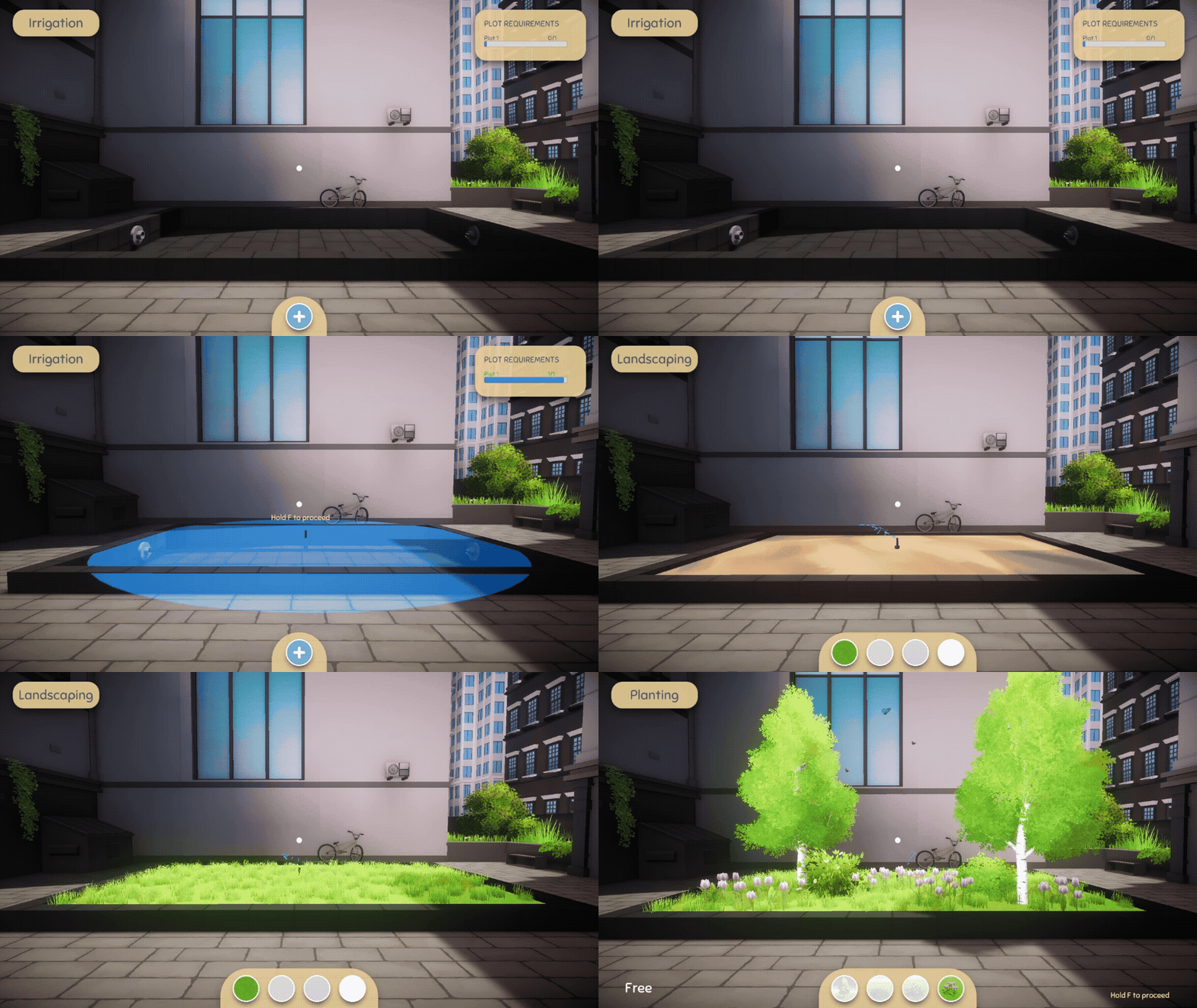
Players restore forgotten urban spaces by designing irrigation systems, painting ground materials, placing plants, adding decorative features, and gradually turning lifeless environments into calm living gardens.
The game combines elements of sandbox building, light puzzle-solving, and environmental design, with a focus on player expression rather than pressure or competition.
Softscape was developed as a personal commercial project for Steam, with the goal of creating a polished playable experience that demonstrates my ability to design, build, and ship a complete game independently.
My Role
Solo game developer, designer, 3D artist, systems developer, UI designer, audio implementer, and founder of Moss Orbit.
What I Built - So far…
First-person restoration gameplay developed in Unity
Irrigation system allowing players to connect water routes and place sprinklers
Ground painting tools for grass, stone, bark, mowing, and erasing
Planting and placement systems for trees, shrubs, flowers, trims, decorations, and water features
Toolbox and hotbar system for browsing, equipping, and organizing placeable objects
Multi-stage level progression across irrigation, landscaping, and planting phases
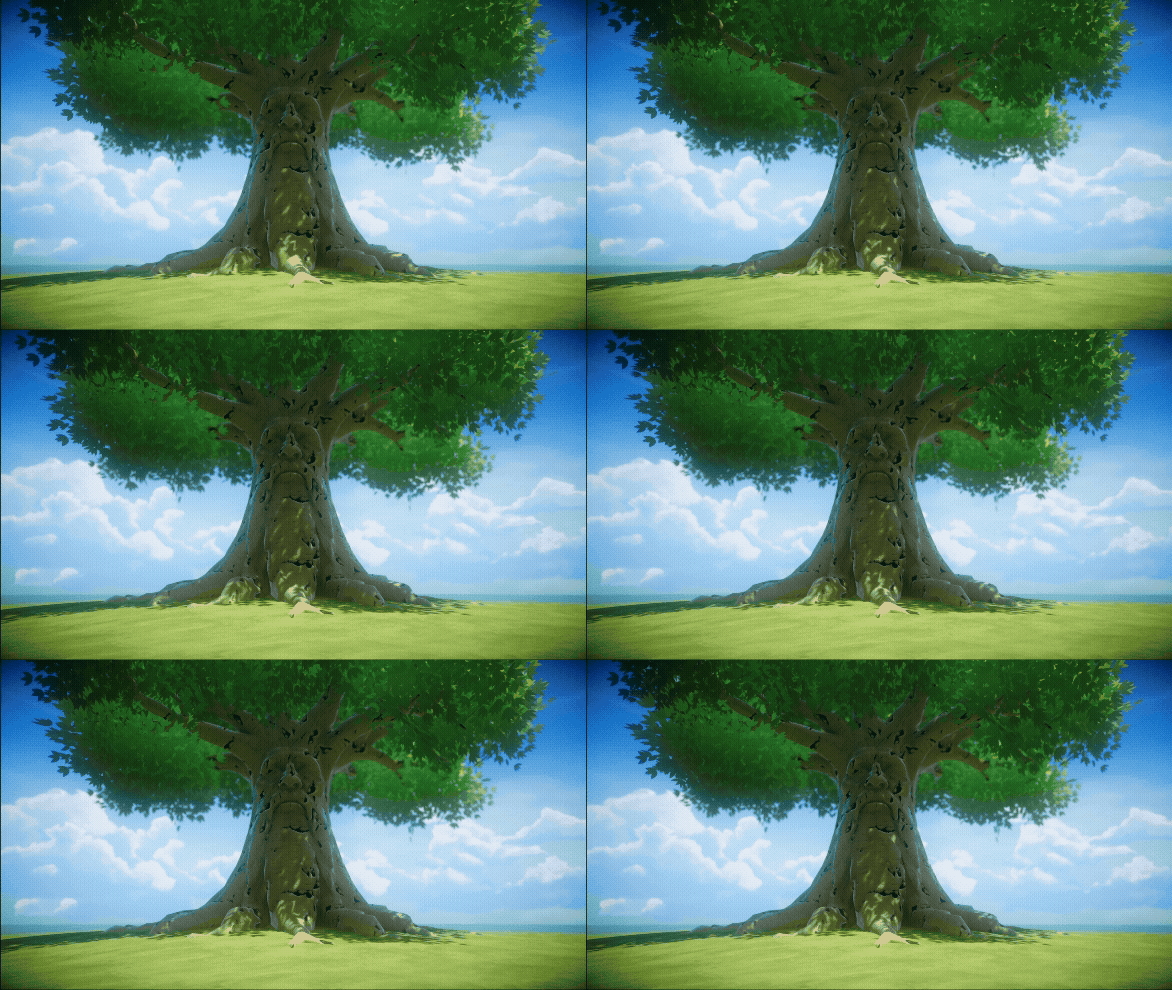
Hub world featuring the Grand Tree, dialogue sequences, and level progression flow
Tutorial and dialogue systems with timed text, player choices, and skip functionality
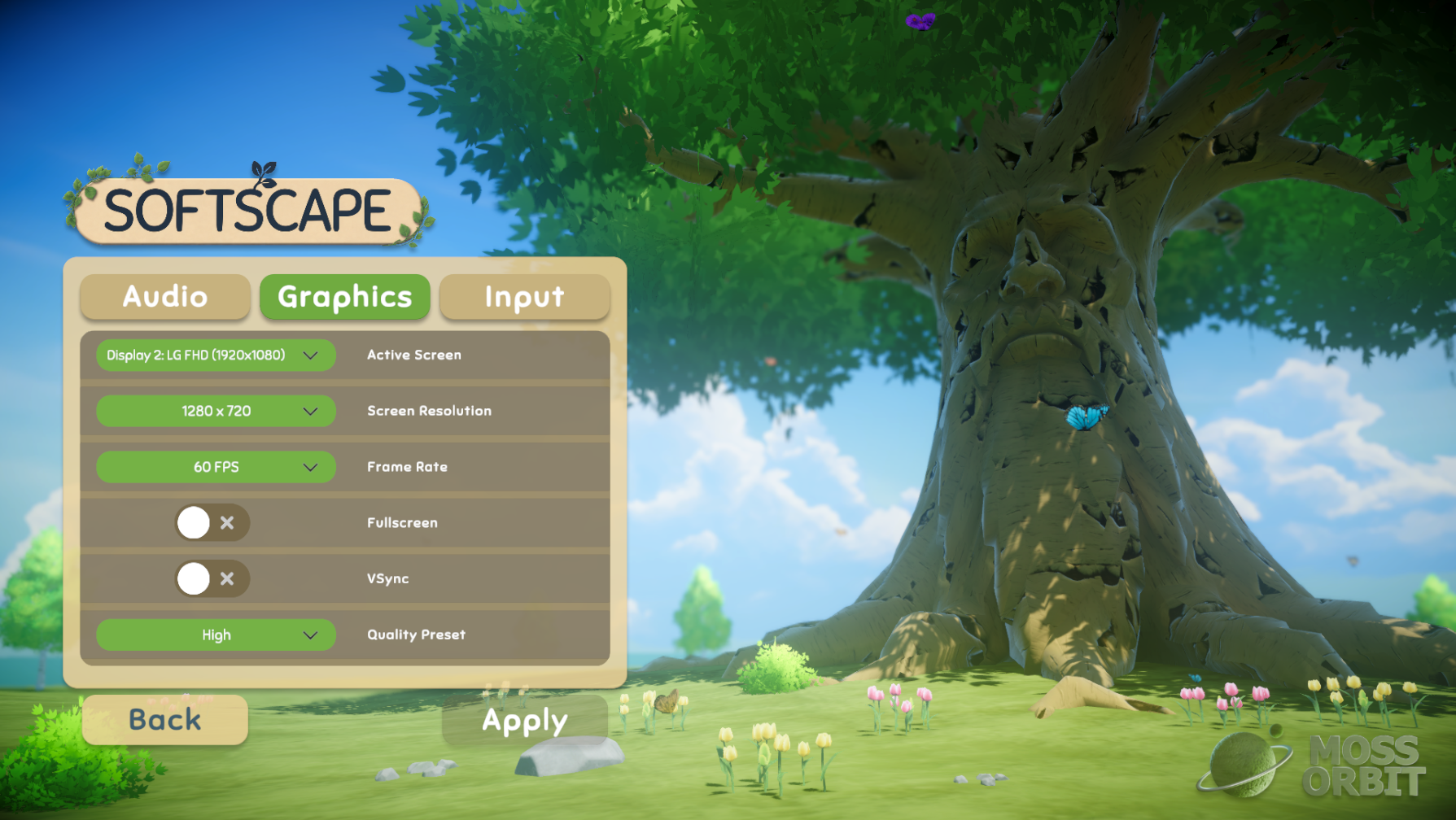
Full main menu, pause menu, options system, audio sliders, graphics settings, and input settings
Custom UI, icons, tool indicators, progress panels, and level completion flow
Steam-ready Windows demo build with trailer, screenshots, capsule assets, and store presentation
Current progress
Softscape represents my first independently developed commercial game under Moss Orbit, bringing together my experience in Unity development, 3D design, interaction design, UI systems, and game production into one complete playable project.
The project demonstrates my ability to take a game from concept through prototyping, production, polishing, Steam preparation, and public marketing. It also reflects my creative direction as a developer, combining technical systems with a calm, emotionally driven player experience built around restoration, nature, and personal expression.
Softscape is currently being prepared for release on Steam, with a polished playable demo created for public showcasing, wishlist growth, and festival participation.

Little Red Coding Club
Summary
An augmented reality educational game designed to teach children the fundamentals of coding through interactive puzzle gameplay, combining storytelling, block-based programming concepts, and AR exploration.
Context
Developed while working at Twinkl Educational Publishing, Little Red Coding Club was created as an educational AR experience that introduces children to coding logic through gameplay inspired by the Little Red Riding Hood story.
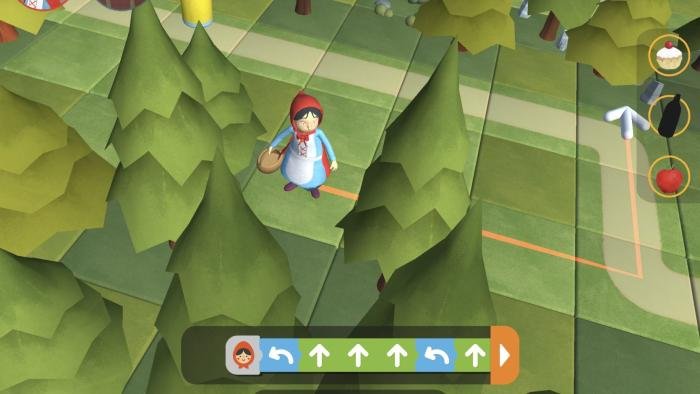
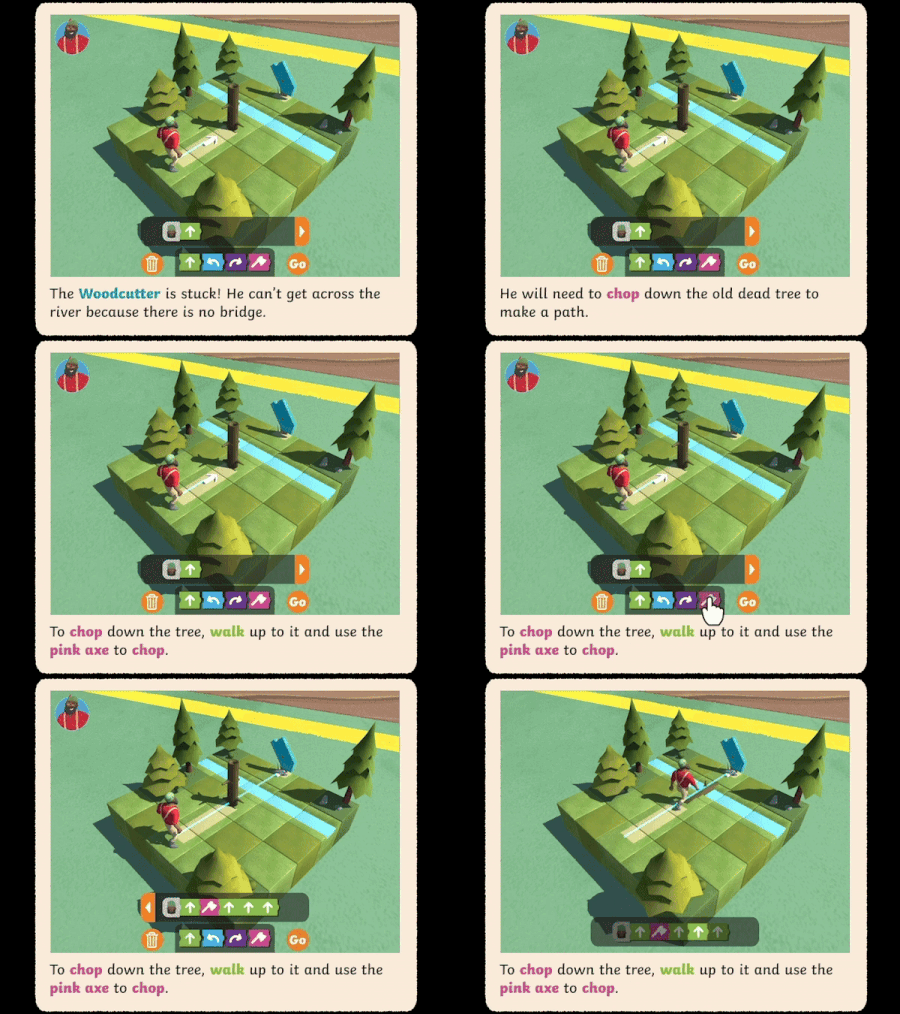
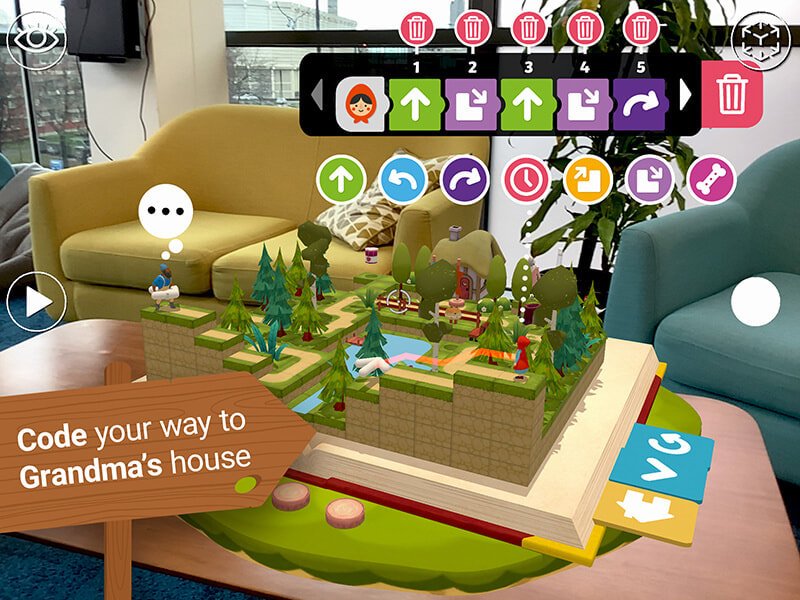
Players guide Little Red through a series of puzzles by arranging command blocks representing movement and actions, teaching core programming concepts such as sequencing, logic, and problem solving.
The game was developed for iOS using ARKit and became one of the first multiplayer augmented reality educational games available on the platform.
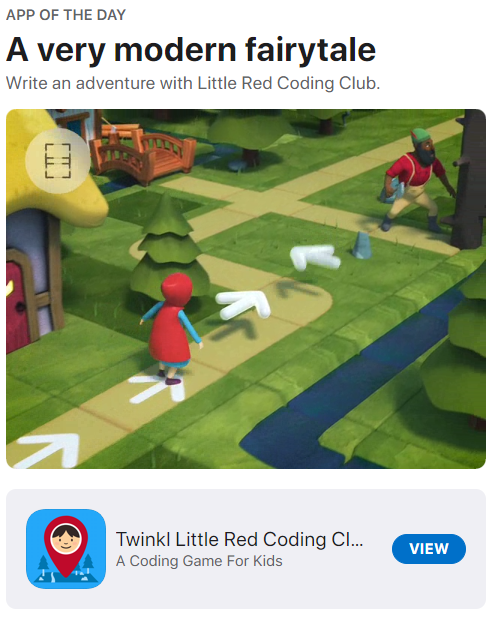
Following its release, the game was featured by Apple as “App of the Day” on the App Store, significantly expanding its reach and recognition.
My Role
3D development, AR implementation, and gameplay system development.
What I Built
Augmented reality gameplay developed using Unity and ARKit
Interactive puzzle mechanics based on visual programming concepts
AR environment allowing players to explore levels on real-world surfaces
3D characters and environments designed for educational gameplay
Multiplayer AR functionality allowing collaborative interaction within the experience
Interactive command system where players arrange instructions to guide the character through levels
Outcome
Little Red Coding Club introduced children to programming fundamentals through an accessible and playful AR experience. By combining storytelling with coding logic puzzles, the game provided an engaging way to teach computational thinking.
The project gained significant visibility after being featured by Apple as “App of the Day” on the App Store, highlighting it as an innovative educational application.
Twinkl Robotics
Summary
An educational robotics game created to teach UK schoolchildren how Mars rovers are designed, programmed, and tested through hands-on construction, autonomous navigation, and sample collection challenges.
Context
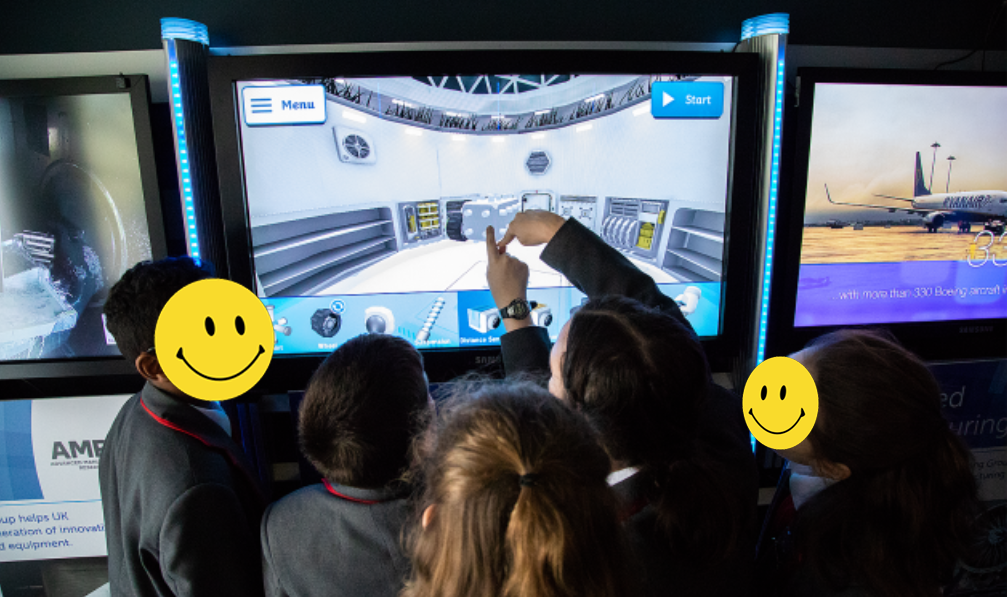
Twinkl Robotics was developed at Twinkl Educational Publishing in collaboration with UK-RAS, the UK Robotics and Autonomous Systems network, as part of an initiative to introduce schoolchildren to robotics, engineering, and space exploration.
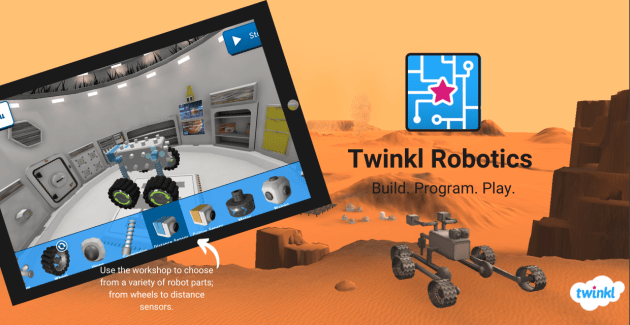
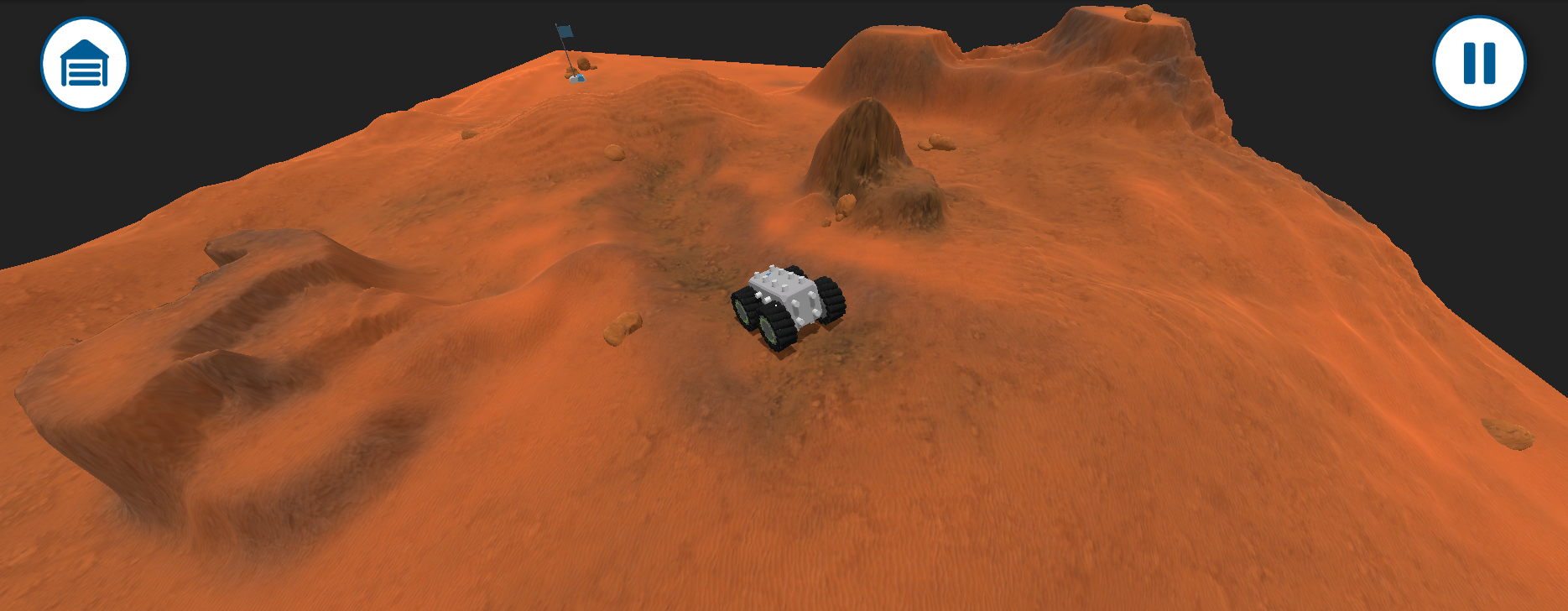
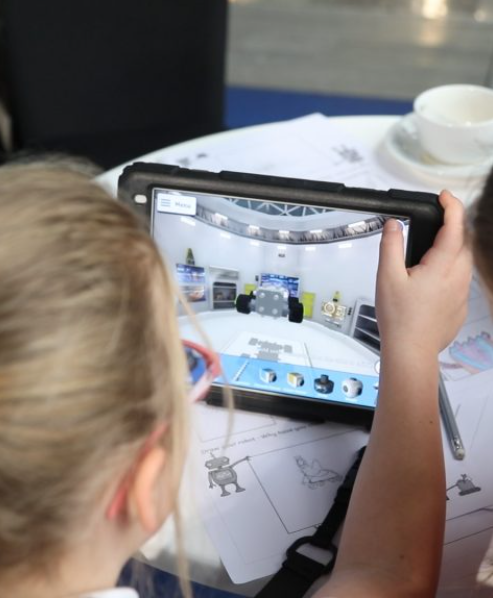
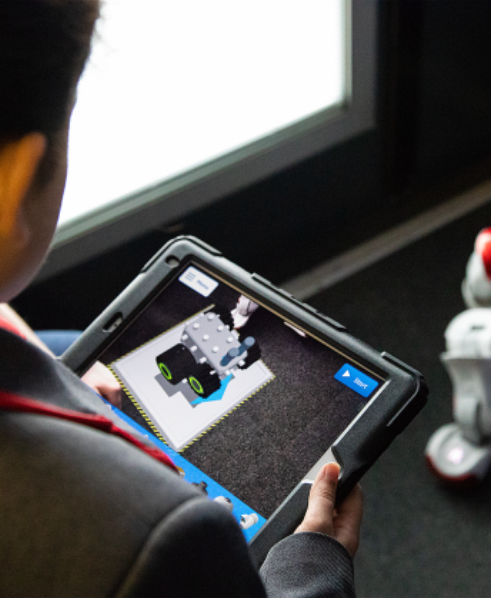
The game allowed players to design and build their own Mars rover using a modular construction system inspired by physical robotics kits and games such as Kerbal Space Program. Players could attach different components to a central rover body, including wheels, sensors, drills, stabilisers, counterbalances, and experimental movement parts.
Once built, the rover could be sent onto Mars-style terrain where players tested whether their design could navigate obstacles, follow paths, collect samples, and complete level objectives.
A key feature of the game was its autonomous programming system. Players could attach a camera sensor to the rover and program it to detect and follow black line paths across the terrain. This introduced children to real robotics concepts such as sensors, navigation logic, automation, environmental detection, and task-based programming.
The project was designed not only as a classroom learning tool, but also as part of a robotics competition for UK schoolchildren. Competition levels were created for live events held in partnership with UK-RAS, giving children the opportunity to test their rover designs against structured challenges.
My Role
Game design, level design, environment design, lighting, particle effects, gameplay support, bug fixing, and competition level creation.
What I Built
Level design for the main educational progression across multiple challenge categories
Mars-style environments designed around rover navigation, obstacle avoidance, and sample collection
Tiered difficulty structure for navigation, line-following, drilling, and autonomous rover challenges
Competition levels used for UK school robotics events in 2019 and 2020
Terrain layouts involving flat ground, hills, rocks, slopes, paths, and sample collection objectives
Gameplay scenarios designed to teach children how rover design affects movement and stability
Lighting and environment presentation for Mars-themed level scenes
Particle effects and visual polish for interactive gameplay feedback
Post-release bug fixing and project maintenance after the main development phase
Ongoing support for new competition content after other team members had moved onto other projects
Cross-platform support for iPad, iPhone, Android, and PC releases
Outcome
Twinkl Robotics helped introduce schoolchildren across the UK to robotics, engineering, programming, and space exploration through an interactive game-based learning experience.
The project was used as both an educational classroom tool and as part of real-world robotics competitions held in partnership with UK-RAS. Children were able to design rovers, test them in simulated Mars environments, and learn how different components affected navigation, stability, automation, and task completion.
My work on Twinkl Robotics built directly on the experience I gained from Little Red Coding Club, particularly around designing educational gameplay that teaches technical concepts through interaction rather than passive instruction.
The project also became one of my earliest examples of long-term product support. After the initial release, I continued maintaining the game, fixing issues, and creating new competition levels for the 2019 and 2020 events, helping keep the product active beyond its original development cycle.
Pongo
Summary
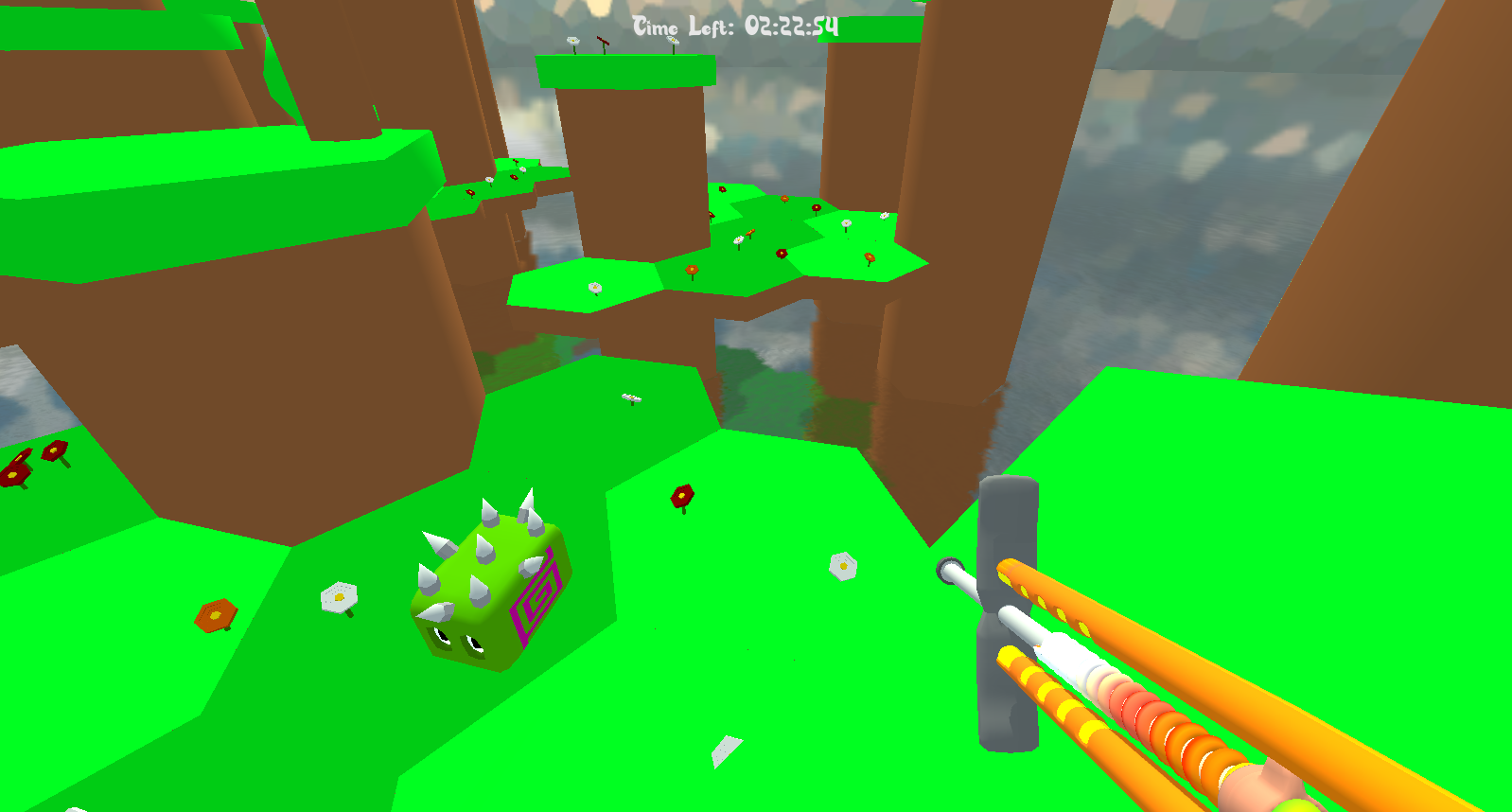
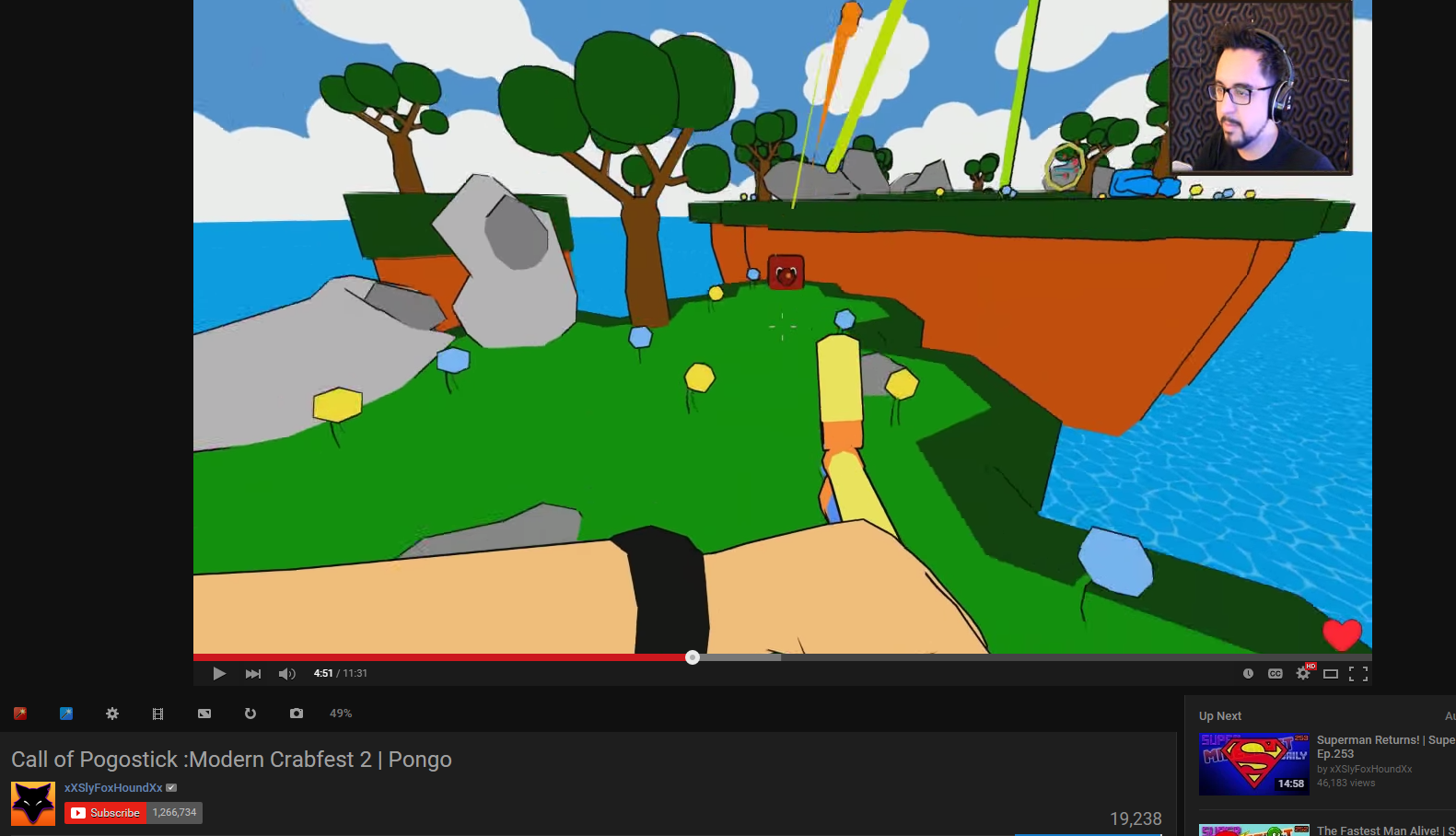
A fast-paced pogo-stick platforming FPS where players bounce across floating island levels, avoid hazards, and shoot enemies while racing against the clock. Link
Context
Pongo was an early independent game project developed in Unity by a small online team. I joined the project at the beginning of development when the core concept was still being shaped, contributing to the game’s original design direction, visual style, character concepts, and 3D asset creation.
The game combined first-person shooting with pogo-stick movement, creating an arcade-style experience where players bounced between floating platforms, fought enemies, and tried to complete levels as quickly as possible.
The visual direction used bright toon-style graphics, simple readable shapes, and hexagonal platform structures to support fast movement, clear navigation, and lightweight performance.
During development, the game attracted attention from YouTube creators and was later released on Steam through indie publisher Black Shell Media. This became my first experience working on a commercial indie game project and interacting with an indie game publisher while helping prepare assets and support materials for release.
My Role
Early game design, original art direction, 3D character creation, weapon design, enemy design, and gameplay support systems.
What I Built
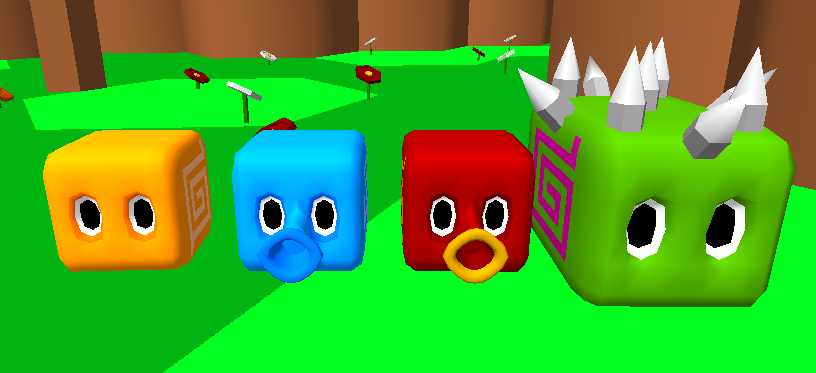
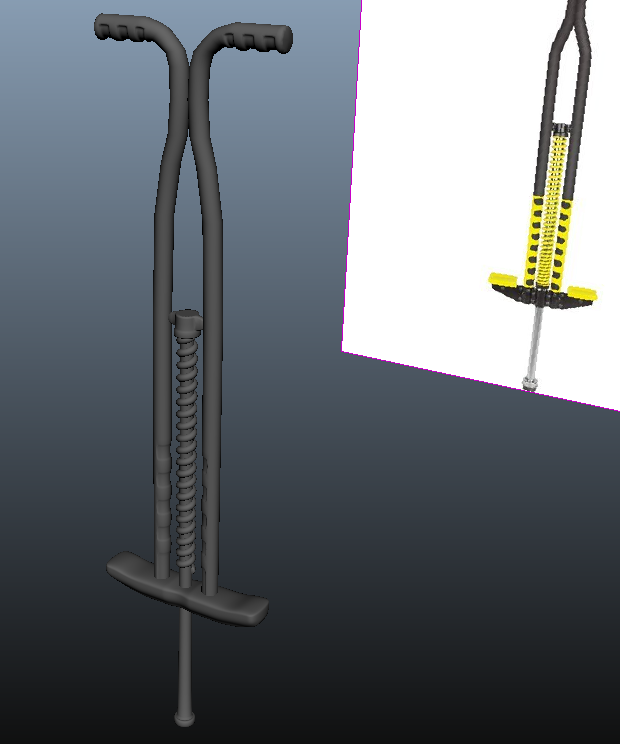
Original 3D models for the main pogo-stick weapon and creature enemies
Pogo-stick weapon design, including the concept of the pogo stick functioning as a gun
Original enemy and creature designs used throughout the game
Early visual direction based around bright toon-style graphics and readable geometric shapes
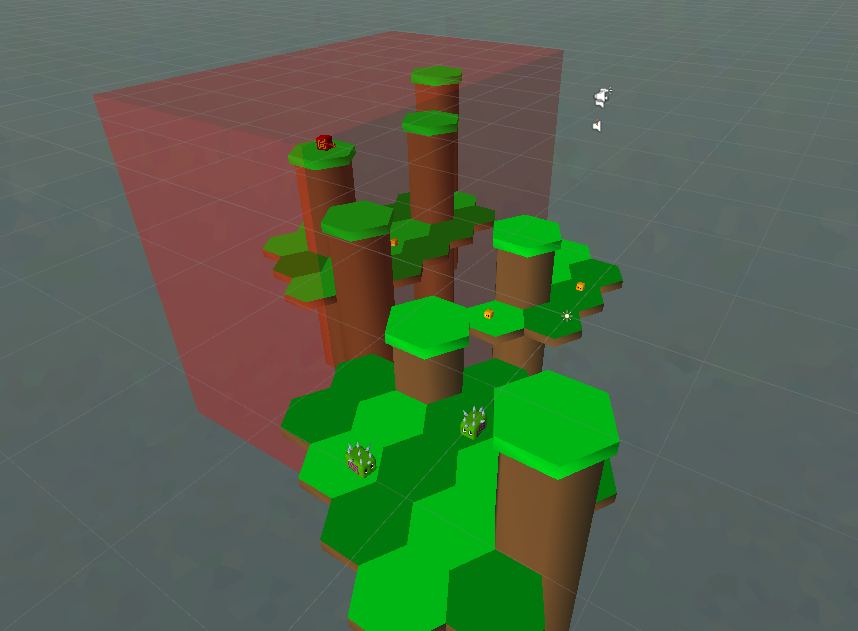
Hexagonal platform and floating-island structure concept for level design
Early environment and gameplay asset concepts for the first playable versions
Trigger-zone logic for enabling enemies and improving level performance
Gameplay support ideas for enemy spawning, encounter pacing, and level optimization
3D assets created using Autodesk Maya, with additional sculpting work in ZBrush for boss character development
Collaboration with a small remote indie team during early production
Outcome
Pongo became my first commercial indie game project and one of my earliest experiences contributing to a shipped game back in 2014. Although I stepped away from active development after around 8 months due to starting university, many of my original character models, enemy designs, gameplay ideas, and visual direction remained part of the final game.
The project was later released on Steam through Black Shell Media and sold approximately 65,700 copies at $0.99 over a two-year period. It also gained visibility through YouTube coverage, giving me early exposure to the relationship between indie games, publishers, creators, and online audiences.
Pongo gave me my first real experience of how a small team can take a raw idea, combine complementary skills, and turn it into a commercial game. It was an important foundation for my later work in Unity, 3D art, game systems, and independent development.